Evaluating the Skeletal Grim Reaper Embroidery Design
When you’re in the business of creating embroidered goods—whether for your small shop, for a client’s custom order, or for your own seasonal projects—the first step is always a professional assessment. You’re not just looking at a picture; you’re judging how a design will translate into stitches, fabric, and a finished product that someone will actually use or buy. Let’s walk through that process with the Skeletal Grim Reaper machine embroidery design.
The Immediate Mood and Visual Personality
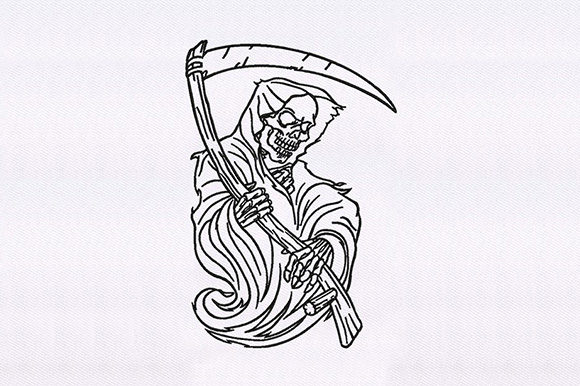
Opening this embroidery file, the first thing you notice is its classic, graphic Halloween spirit. It’s not overly gory or frightening, but it carries a clear, recognizable gothic aesthetic. The skeletal structure and iconic scythe are rendered with a balance of detail and simplicity that suggests it’s designed for clean stitching. The layout feels solid and central, making it a confident focal point. This isn’t a cute or whimsical Halloween design; it’s one that would resonate with adults, fans of traditional horror themes, or anyone looking for a bold, statement piece on their apparel or decor. For a craft business, that’s a valuable niche. It has a personality that stands apart from more common pumpkin or ghost designs.
Natural Project Pairings: Where This Design Belongs
Thinking practically, where would I actually use this? My mind goes to projects where the theme can be embraced fully without being too overwhelming. A custom embroidered tote bag for someone who loves Halloween festivals is a perfect fit. The design’s size and central focus would look striking on a canvas bag. Similarly, a heavyweight cotton sweatshirt or hoodie becomes a seasonal, wearable statement piece. For small shop merchandise, this could be a limited-edition Halloween item that sells well in October.
I also consider it for a more permanent application, like an embroidered patch. Patches allow for flexibility—they can be ironed or sewn onto jackets, backpacks, or hats, and the Skeletal Grim Reaper design, with its clear outlines and defined shapes, would stitch up into a crisp, durable patch. Another interesting avenue is home decor for the season: a pillow cover for a Halloween-themed living room, or even a kitchen towel for someone with a darker sense of humor. It’s a design that feels more suited to adult-focused gifts and boutique products rather than, say, baby clothes or nursery decor.
A Real Scenario: Preparing a Client’s Custom Sweatshirt
Imagine a client orders a personalized, embroidered sweatshirt for a Halloween party. They want something unique. You load the Skeletal Grim Reaper file, looking at the provided formats—ART, DST, PES, HUS, JEF, and others—ensuring compatibility with your machine. You select a dark heather gray sweatshirt as the base. The contrast of white and potential accent threads against that dark fabric will make the design pop. Your practical concerns now shift to execution: stitch density for a stretchy fabric, choosing the right stabilizer, and ensuring the smaller details of the scythe and skeletal fingers stitch out cleanly without pulls or skips. This is where the design’s inherent structure becomes crucial. A well-digitized design with sensible stitch paths will handle this better than a overly dense, complicated one.
Performance Considerations and Careful Applications
For any embroidery designer, knowing where a design might struggle is as important as knowing where it will shine. The Skeletal Grim Reaper, with its likely use of satin stitches for outlines and fill stitches for broader areas, needs a fabric that can support the stitch load. Thin, stretchy fabrics like lightweight t-shirts might require extra stabilizer and a careful test run to prevent distortion. Highly textured fabrics, like some towels or blankets, could obscure the finer lines.
Curved surfaces, like the crown of a cap, present a challenge for any larger, central design. The design’s layout would need to be evaluated for its adaptability to that curved hoop area. Similarly, if you intend to scale it down for a very small hoop size, the tiny details—the ribs of the skeleton, the lines of the scythe—must remain clear. If they become a muddled, dense blob of stitches, the design loses its appeal and your product loses its professionalism.
Products that require frequent washing, like aprons or tea towels, need a robust stitch structure. You’d want to test the design’s durability by stitching it on scrap fabric, washing it several times, and checking for loose threads or fading clarity. This directly impacts customer trust and the perceived value of your handmade product.
Impact on Visual Appeal and Business Value
From a business perspective, a well-executed embroidery of this design adds significant visual appeal to your product line. It conveys a sense of expertise—the stitches are clean, the details are sharp, the theme is cohesively presented. For an Etsy seller or craft fair vendor, a product featuring this design, photographed well on a finished tote or sweatshirt, creates strong buyer engagement. It looks professional and intentional.
It also affects giftability. A Halloween-themed embroidered pillow cover or blanket could be a unique holiday gift for a friend who enjoys the season. The design’s recognizability and classic theme make it an easy choice for someone seeking a non-generic present. For brand consistency, if your small shop specializes in gothic or alternative style handmade goods, this design aligns perfectly, reinforcing your brand’s visual identity.
Essential Designer Notes Before You Stitch
Before committing this design to a final project, my routine is always the same. First, I test it on scrap fabric identical to my project fabric. This reveals everything: how the thread colors contrast with the background, whether the stitch density causes fabric puckering, and if any small sections need adjustment. I check it in both black and white mockups mentally, considering how it would look on both light and dark backgrounds—sometimes a design needs a different thread palette for a dark fabric.
I confirm the hoop size required by examining the design dimensions in my software, a step you must take as the specific sizes aren’t listed here. I inspect the small details in the test stitch-out, like the tip of the scythe and the skeletal joints, ensuring they aren’t too fragile or overly dense. Using proper stabilizer is non-negotiable for a clean finish.
Finally, and crucially for commercial use, I confirm the licensing terms of this digital embroidery file. The provided formats suggest wide machine compatibility, which is excellent, but the license for selling finished products or using it in commercial embroidery projects must be clear. Never assume; always verify. This protects your craft business and respects the digitizer’s work.
A Confident Addition to Your Halloween Toolkit
In summary, the Skeletal Grim Reaper machine embroidery design is a confident, thematic asset. It’s not for every project or every customer, but for its target audience and suitable applications—like custom adult apparel, statement patches, and seasonal home decor—it performs with a clear visual personality. Its success hinges on your professional preparation: testing, stabilizing, and pairing it with the right fabric and product. When done correctly, it results in a finished product that feels crafted, intentional, and perfectly aligned with the darker side of Halloween spirit. For designers and makers looking to expand their holiday offerings with something beyond the typical, this design is a practical and compelling choice.